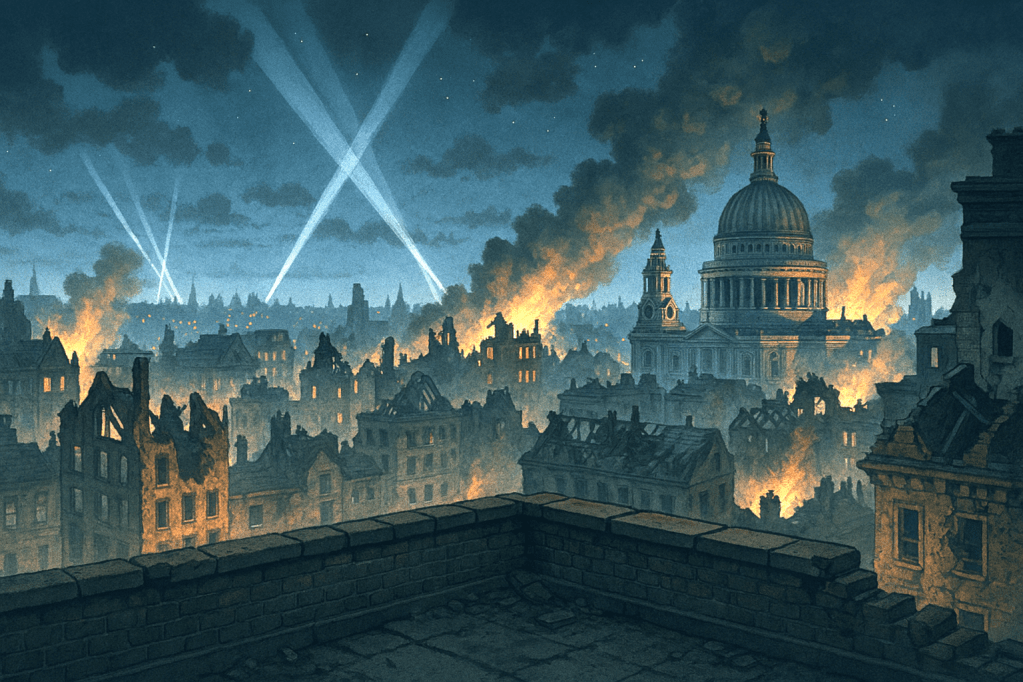
Mr. Brook stood atop the office building and surveyed the devastation that was London. Fires burned as far as his eye could see. The stench of cordite hung in the air.
The third week of continuous German air raids had left much of the Capital in ruins, hundreds killed, houses demolished, businesses disrupted.
Mr. Brook had magazines to publish and so far, although bombing had played havoc with the printers, his own building, had been left unscathed.
Mr. Stephens, Mr. Brook’s head of the post room, found him and delivered bad news. ‘The General Post Office is being rather inconvenient,’ he said. ‘An urgent letter from a Government Department in Bristol, posted on Tuesday, only reached us on Friday.’
Mr. Brook’s face blanched and his hand trembled. This was serious news indeed. His entire business relied on the post office for so many things: delivering reporters’ correspondence, advertising copy, sending the finished magazines to subscribers. ‘This is unthinkable. Three days to deliver a letter.’
For several days at the beginning of the Blitzkrieg the post had been lamentable, Mr. Brook recalled. On some days no post had been received until just before lunchtime.
‘This is why we must defeat the Nazis,’ Mr. Brook emoted, adopting Churchillian overtones.
‘Our very way of life is under threat. Imagine living in a country where it takes three days for the post office to deliver a letter.’
‘Yes, sir,’ Mr. Stephens brushed a smut from his tearful eye, ‘We mustn’t let the Nazis win.’
(With acknowledgement to Gordon Stephens, Fleet Street Blitzkrieg Diary, Ernest Brook Ltd., London: 1944)
Click here for more war stories
Words: Richard Rooney
Illustration: A.I.
Flash Fiction 250
 Flash Fiction 250